
Remembering Mary Macarthur - trade unionist and suffragist
‘Women are unorganised because they are badly paid, and poorly paid because they are unorganised’

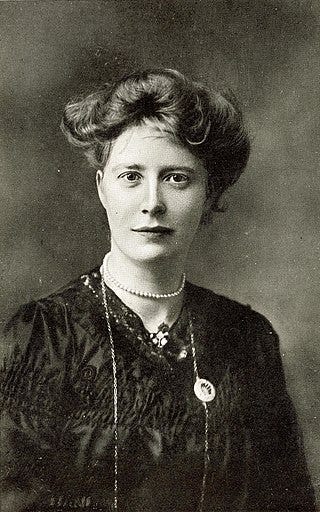
Mary Reid Macarthur (1880 – 1921) is best known for leading the women chain makers of Cradley Heath to victory in 1910 in their fight for a minimum wage and organising a national strike fund to support 10 weeks of industrial action to force employers to implement the rise.
Despite passing away at just 40, in her short life she built trade unions, led strikes, wrote widely and, as a Suffragist, fought for the right of all women to gain the vote not just certain groups of women.
Mary Macarthur was born in Glasgow, the eldest of six children, and had dreams of becoming a full-time writer. At aged 21 her Tory father sent her to spy on a trade union meeting and, after hearing a speech made by John Turner about how badly workers were being treated, she was converted to the workers cause and never looked back.
She became secretary of the Ayr branch of the Shop Assistants' Union which led to her work for the improvement of women's working conditions.
She married William Crawford Anderson, the chairman of the executive committee of the Independent Labour Party but, unusually for the time, she kept her maiden name.
She became general secretary of the Women's Trade Union League (WTUL) and was involved in the formation of the National Federation of Women Workers (NFWW) and National Anti-Sweating League.
By 1907 she had founded the Women Worker, a monthly newspaper for women trade unionists, and, despite six weeks in hospital with diphtheria, she presented findings of her research on sweated homeworking women to the House of Commons Select Committee on Home Working.
Referring to low earning power of women, Macarthur said that ‘women are unorganised because they are badly paid, and poorly paid because they are unorganised’.
Her tenacious lobbying and campaigning led to a minimum wage law, the Trade Board Act 1909, directly due to the evidence Macarthur and others had gathered.
In 1908 Mary Macarthur organised and addressed a demonstration in Trafalgar Square after women at the Corruganza box factory in Tooting, South London struck in protest at wage cuts and mass sackings. After four weeks all wage reductions were withdrawn except in one agreed job and all strikers were reinstated.
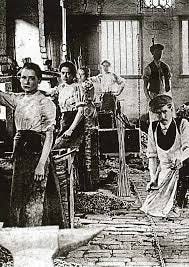
The women chainmakers of Cradley Heath
In 1910 Mary led the successful strike by women chainmakers of Cradley Heath and she proposed that surplus money left in the strike fund should be used to build a ‘centre of social and industrial activity in the district’. Thousands of local people turned out for the opening of The Cradley Heath Workers’ Institute in 1912.
In 1911 Mary led the so-called Bermondsey Uprising after Macarthur's NFWW started recruiting women in the local food and drink factories. In the August heat the appalling conditions became unbearable and over 14,000 women walked out on strike from 22 factories. A mass rally was held in Southwark Park where the oratory of Macarthur was backed up by another giant of the women’s movement Charlotte Despard and George Lansbury. Macarthur led the negotiations and secured another historic victory for low-paid women.
She took this same class approach when it came to campaigning for universal suffrage and the right to vote. As a result, she was totally opposed to those Suffragettes who were willing to accept the franchise being given to some women. Macarthur believed that a limited franchise would disadvantage the working class and undermine the granting of full adult suffrage.
In 1913, in response to the government Prisoners (Temporary Discharge for Ill Health) Act 1913 whereby hunger striking prisoners would be released when too weak to be active and permitting their re-arrest as soon as they were active, Macarthur took part in a delegation to meet with the Home Secretary, Reginald McKenna and discuss the so-called Cat and Mouse Act.
McKenna was unwilling to talk to them and when the women refused to leave the House of Commons, Macarthur and Margaret McMillan were physically ejected and Evelyn Sharp and Emmeline Pethick-Lawrence were arrested and sent to Holloway Prison.
Although an opponent of the First World War, from 1916 Macarthur was a member of the official Reconstruction Committee, a body set up to give advice on the employment of women after the war. Mary wrote a report which recommended paid training, annual holidays, a maximum working week and a minimum wage.
At the end of the War Mary was on the Labour Party National Executive but her work was interrupted when her husband died during the flu epidemic of 1919.
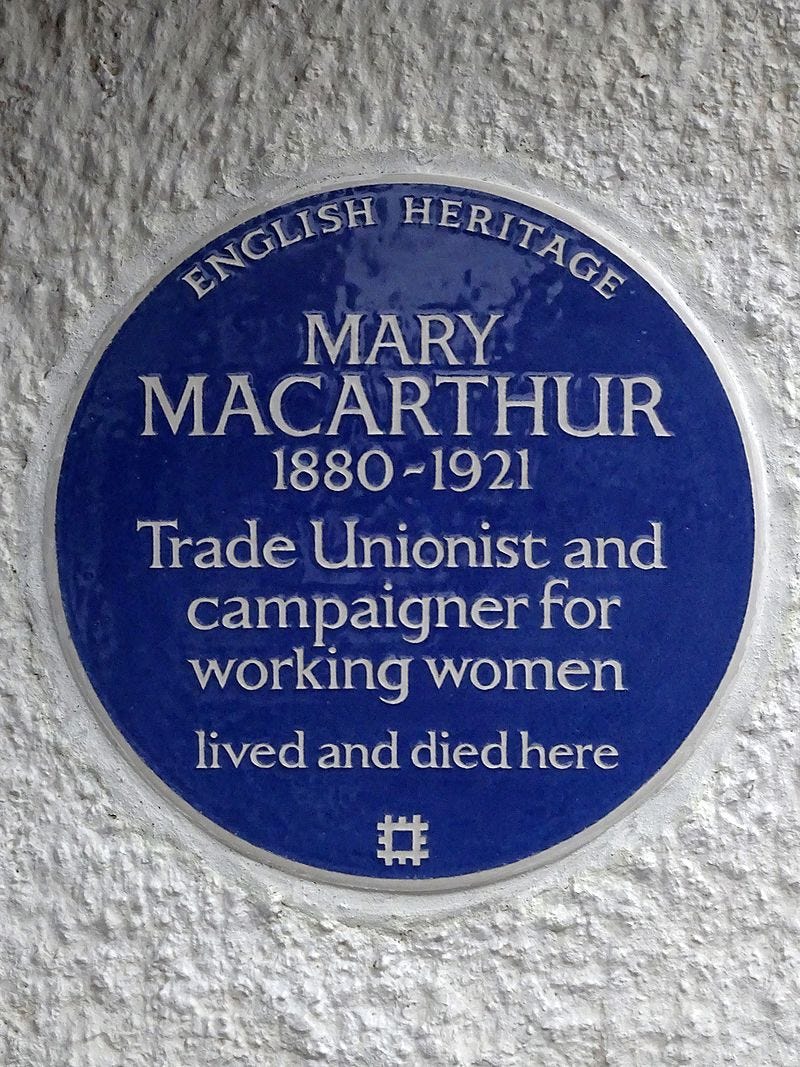
Mary herself died of cancer in Golders Green, London on January 1, 1921, and a blue English Heritage plaque was placed on her house at 42 Woodstock Road in 2017. Interestingly, the house opposite bears another plaque remembering the ‘Queen of the Music Hall’ Marie Lloyd who lived there at the same time, and it is very likely they knew each other.
In fact, Marie Lloyd took part in the so-called Music Hall War of 1907 when stage workers and artistes launched strike action against low pay and long hours. After two weeks the employers conceded, and the successful strike resulted in a rise in pay and better working conditions.
It is not too fanciful to imagine these two formidable women swapping tales of struggle and strife and hard-won victories.
Please take the time to watch this extraordinary film about the Cradley Heath Chainmakers, Nothing to Lose:
Nice article Brian